2.11.2011

"I like your style, Dude."


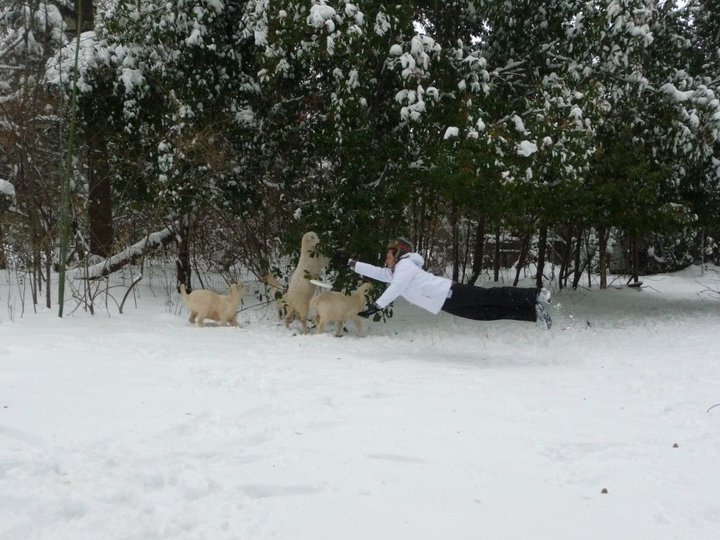
This picture was taken in early December. From it, we can deduce that

a) Willy is a badass

b) 7 inches of snow isn't enough to deter a goat's appetite

c) Dana has a knack for frisbee/husbandry photography

1.25.2011

"Racially, he's pretty cool?"

At both goat roasts, I've toasted the goats before releasing the masses to eat. And both times, I've delivered an average (at best) speech, worthy of nothing more than a head nod and stray "hear hear". Clearly, I'm no orator.

If I were smart, I would have incorporated some Wendell B. quotes. Nothing like a little agricultural activism literature to get a bunch of college kids jacked up, right? Add some alcohol and a spit-full of meat, and we could have a serious goat roast on our hands.

There's always next year to look forward to, though, so I've been digging around for some relevant passages. Mr. Berry's "The Pleasures of Eating" seems particularly appropriate. Aside from the all-encompassing phrase "Eating is an agricultural act," Berry suggests seven ways to better understand and appreciate our food. The first sentence of each point is listed in bold below.

1. Participate in food production to the extent that you can.

Turning over two overgrown backyards to a not-entirely-legal goatscaping experiment on a leap of faith seems pretty close to "the extent that you can." Check.

2. Prepare your own food.

Check.

3. Learn the origins of the food you buy, and buy the food that is produced closest to your home.

The total distance from fire pit to Ms. Charlie's barn is 12.2 miles. Check.

4. Whenever possible, deal directly with a local farmer, gardener, or orchardist.


Check.


5. Learn, in self-defense, as much as you can of the economy and technology of industrial food production.

Backyards beat industrial-scale feed lots any day of the week. Check.

6. Learn what is involved in the best farming and gardening.
That's why you're on my bookshelf, Wendell. Check.

7. Learn as much as you can, by direct observation and experience if possible, of the life histories of the food species.


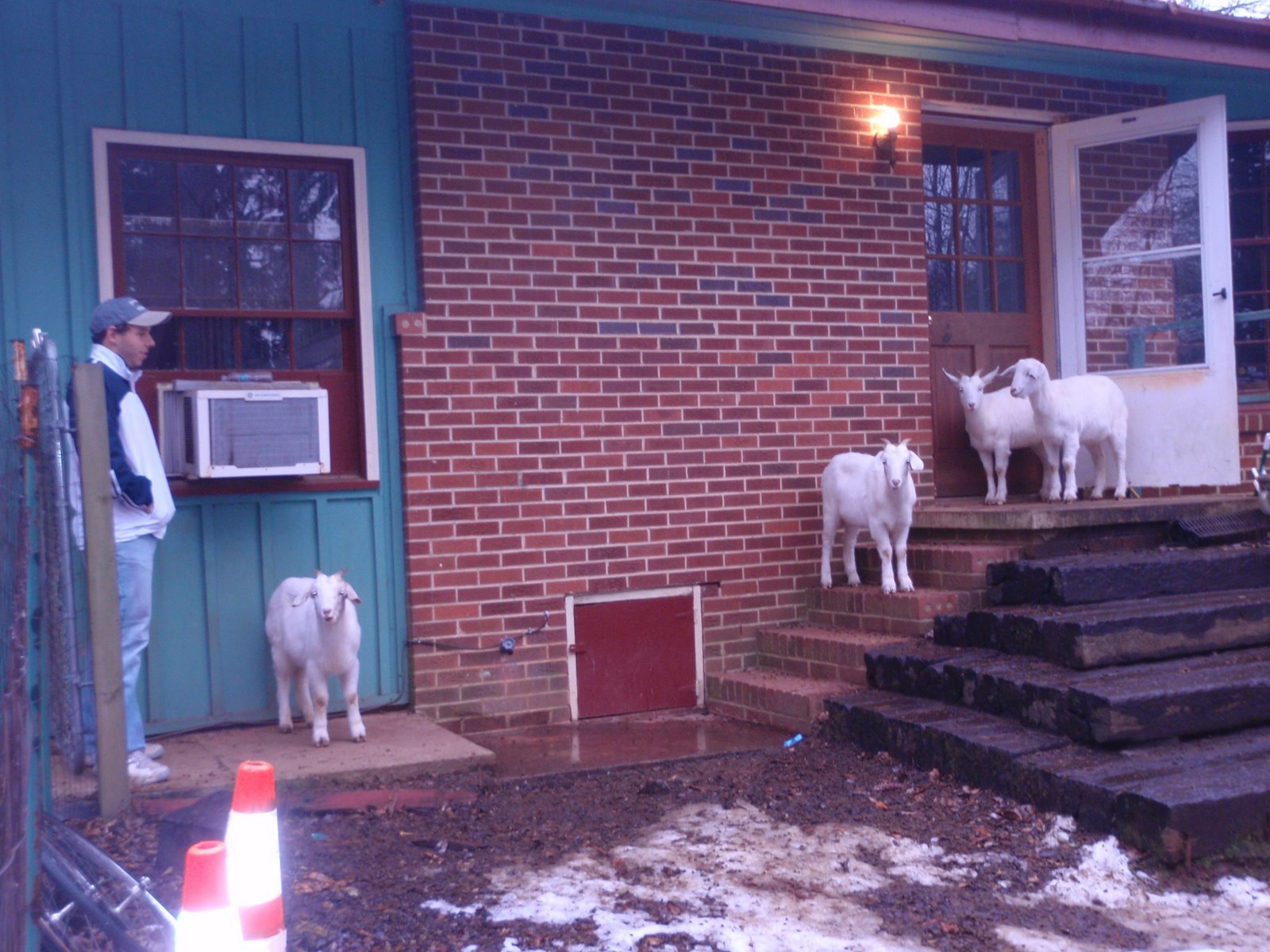
When your goats' favorite hangout is the back porch, it's difficult not to learn the ins and outs of Capra aegarus hircus. Check.

1.24.2011

"Just because we're bereaved doesn't mean we're saps!"


All hands on deck.

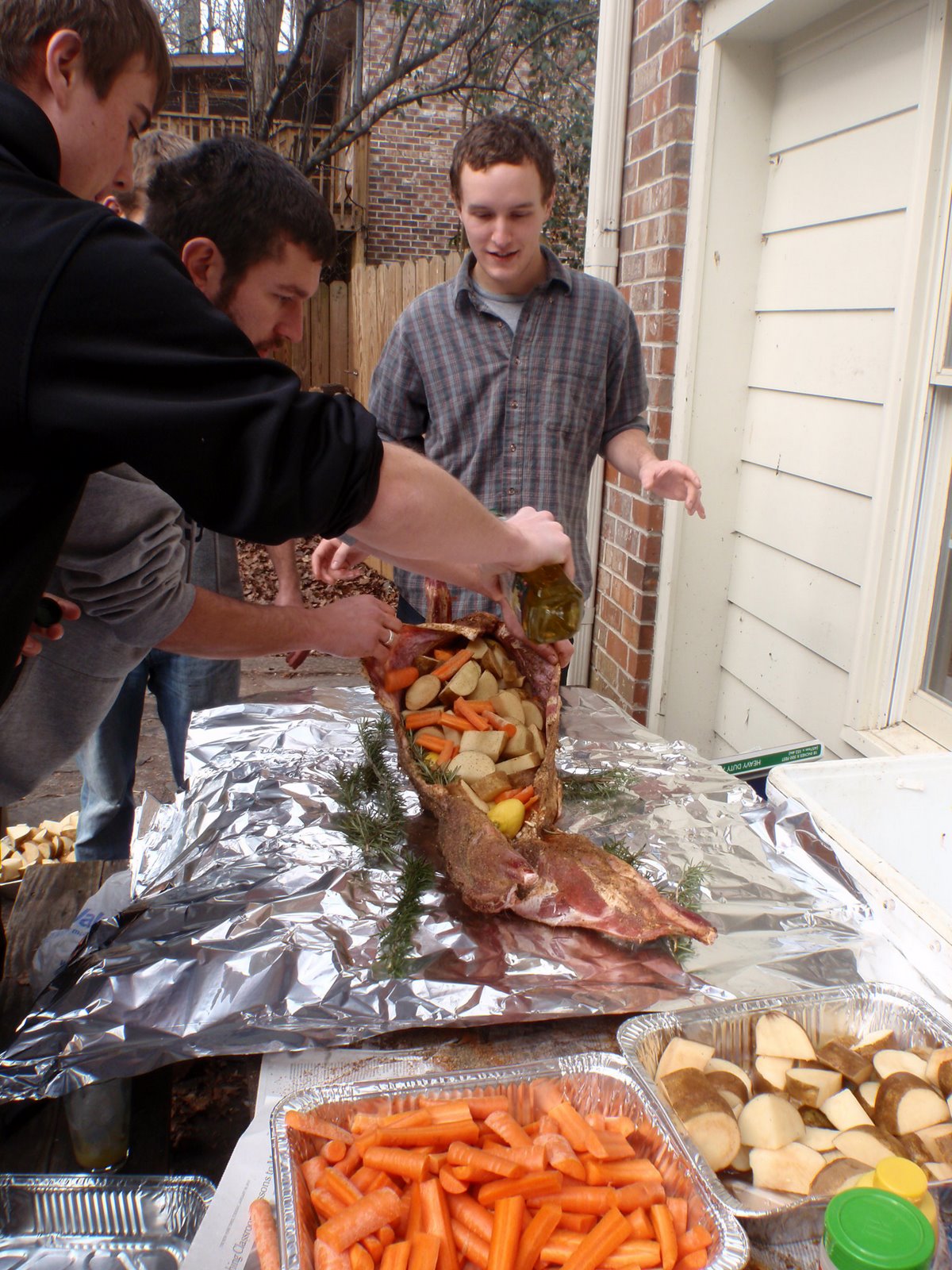
An excellent finish to another successful goatscaping season. Three and a half goats were roasted to perfection, feeding around 50 friends and family. Not bad for a few chubby goats and some side dishes.

And thank you again to those who brought food. Very cool. There's no way I'll remember all that was brought, but there were spring rolls, slaws, mac and cheese, spicy cabbage, desserts, beans, salads, and sweet potatoes. All to supplement the goats - one Texas barbecue, another Jamaican jerk, and the other Mediterranean. It was quite a spread.


Come n' getcha some goat.

It seems like I overheard the Jamaican jerk goat getting the most high praise. No surprise there. This year, we were lucky enough to have a goat seasoned by Kelly, owner of the legendary Kelly's Authentic Jamaican Food. He kept his recipe pretty close to the chest, letting us only see the final seasoned product. Whatever he did, he did it well.


A big Dougie Shoutout to all involved in this year's goat project.

1.18.2011

A Job Well Done


What a day. It's difficult to describe an afternoon and evening dedicated to killing and skinning four goats. Either in conversation or with text. So, I'll save the struggle for the next time somebody asks me in person.

Now, I can say that it went as well as a day like that can go. From start to finish, the guys insisted on being involved, eager to be a part of the process and learn as much as possible. I was impressed with just how willing they were to get some serious hands-on learning. Job well done, men.

Pictures of the process can be found here. Be forewarned, if goat guts aren't your thing, perhaps direct your attention here, instead.

Now comes the fun part: scheming about just how we're going to prepare these bad boys. The theme of regional cuisines has been tossed out, with each goat cooked in the style of a goat-eating culture. That could mean a Jamaican Curry Goat, a Mediterranean Goat, a North African Goat, and a repeat of last year's Texas Goat. Everybody's a winner.

1.17.2011

"If you will it, Dude, it is no dream."

Today is killing day. And only now has the unidentifiable heavy feeling in my stomach begun to set in. It's not a nervous or guilty feeling, but whatever it is, it's there. A respectful anxiousness almost. It was there last year, too, and I hope it's there every time I'm in a similar situation.

In nearly every conversation involving goat slaughtering, someone inevitably brings up the "sadness" or "guilt" I should supposedly be experiencing. "Was it hard?" "How could you kill your pets?" "But they had names!" Heard 'em all.

And why shouldn't people be shocked? Killing and eating our own food is something most of us have become distanced from, either by choice or convenience. To be honest, before last year's goats, I was no exception. I sped past the animal rights activists passing out flyers just as fast as the next guy.

So, putting ourselves in a position to buy, raise, kill, and ultimately eat a large animal seems counterintuitive. But, the knowledge gained from last year's experiences - and several more this past hunting season - has resulted in an entirely new personal philosophy on eating food. Now, it makes too much sense not to.

Credit should also be given to the recent increase in food conscious movies and literature. Food, Inc., Supersize Me, King Corn, Wendell Berry, and Michael Pollan created a perfect storm of influences that has helped alter my views, as well as the views of countless others. The fact that this year's goat owners are adamant and excited about today's slaughtering is proof enough.

If you, the reader, are struggling with the idea of our four goats dying, I say to you:
  1. Read and watch the media above. This essay by Michael Pollan is a good starting point.
  2. Understand that our goats lived the happiest of goat lives
  3. Rest assured the killing process will be as quick and humane as possible
  4. Come celebrate the goats - and food sustainability - next weekend with the end-of-season roast
12.18.2010

Goat Summit 2010

Recently, this year's goat herd owners and I met in the Dougie House basement to determine the fate of our four brave goats. Ultimately, as was the case last year, all four will be killed, butchered, and turned into a delicious meal. The question is when.

Because of exams, work schedules, and the holiday break, it was decided that the goats would remain on Dana and Mikey's property, where they can continue to destroy the backyard's privet, honeysuckle, and English ivy population until everyone returns after the New Year. Then, sometime during the second or third week of January, all four goats will be killed, slow roasted, and celebrated with another Dougie caliber cookout.

Pictures and notes from the Dana/Mikey goat compound will be posted in a few week's time. Meanwhile, the latest report on the herd is that they have continued to clean up the yard and, most importantly, begun to concentrate on the groundlayer of English ivy.

12.01.2010

"This is a private residence, man!"

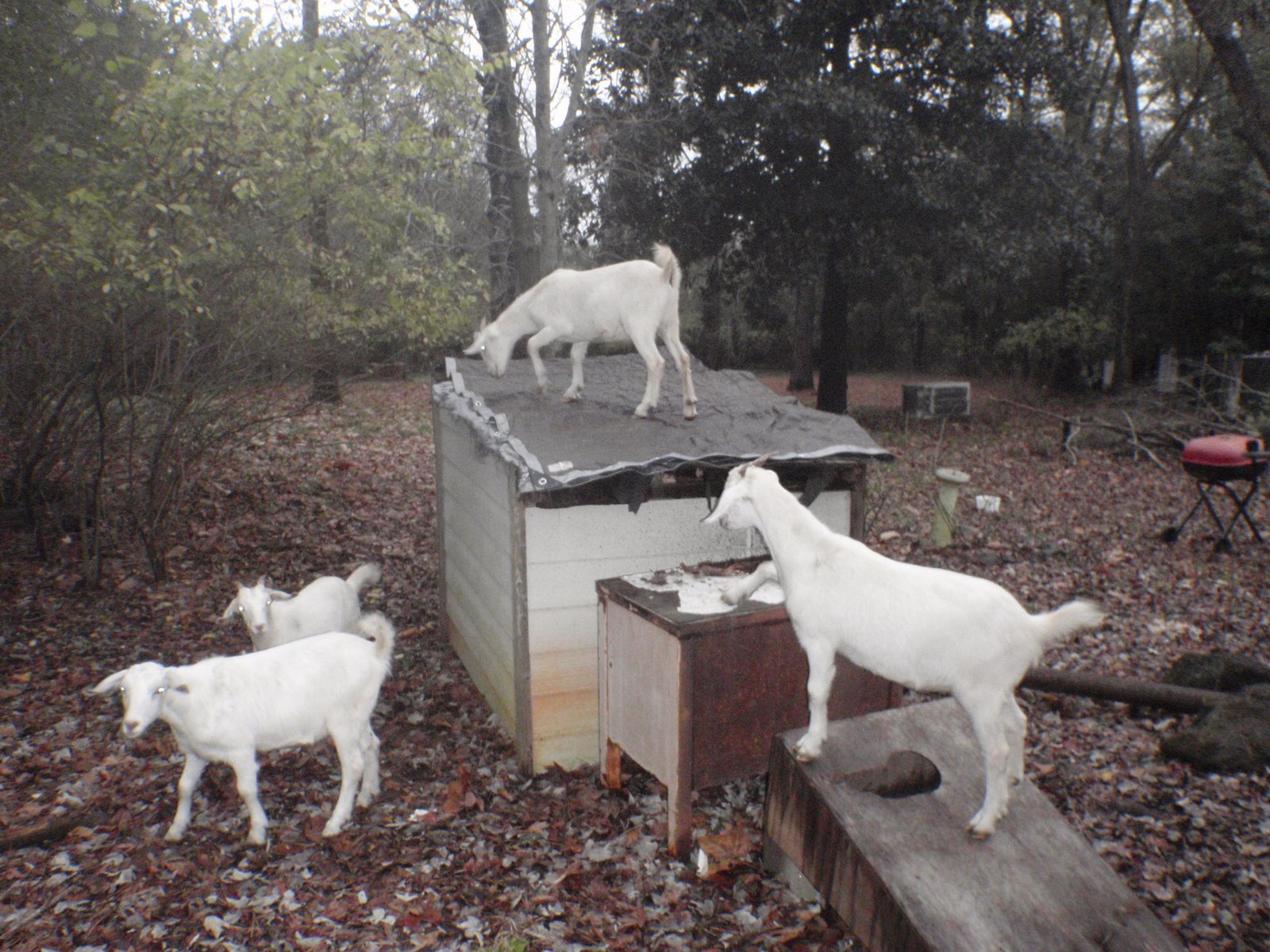
Like last year, the goats were together again for Thanksgiving Break. This time, the reunion took place in Dana and Mikey's yard, home of Trevor and Cody - the humble, grounded goats pictured below.


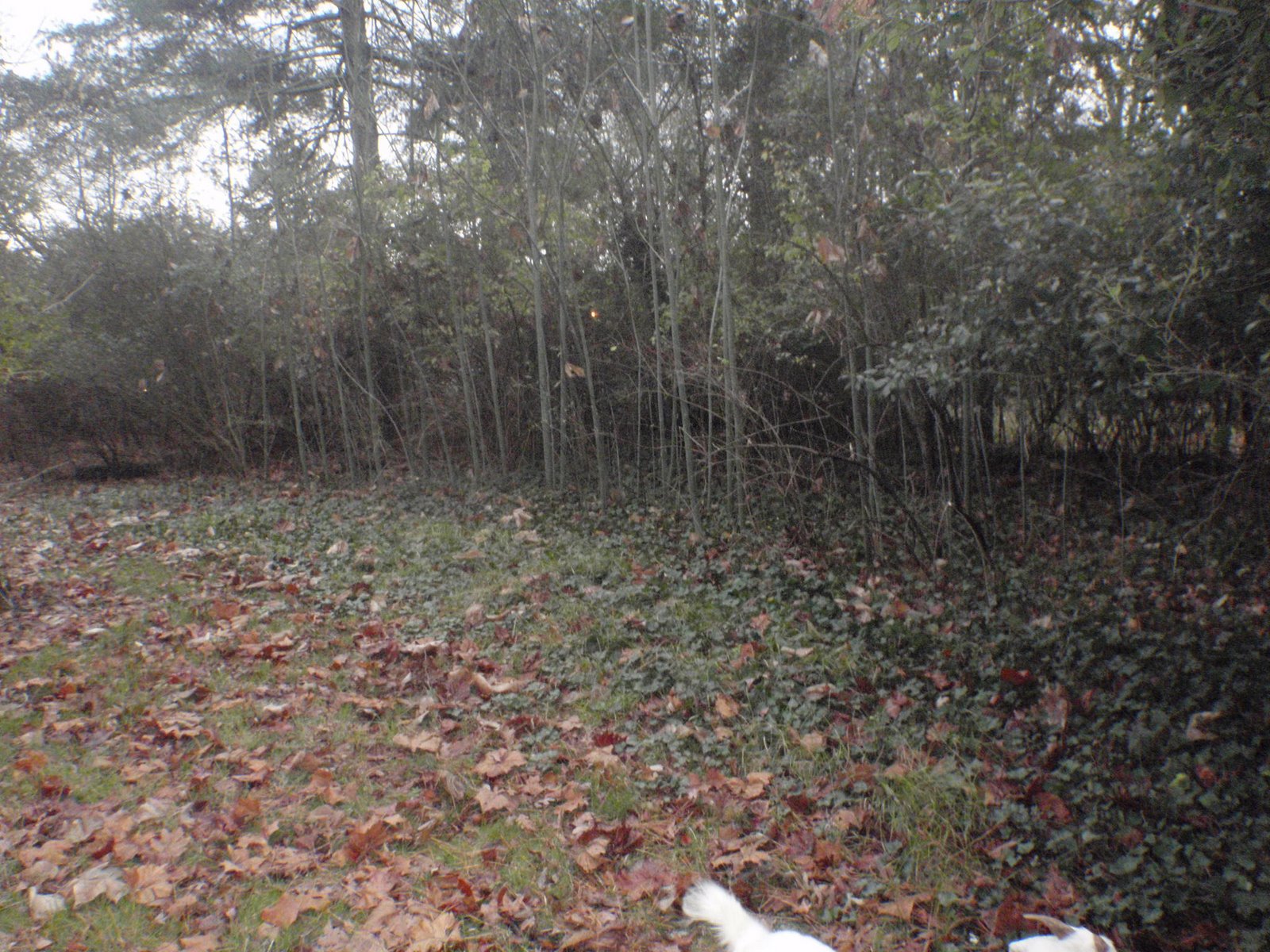
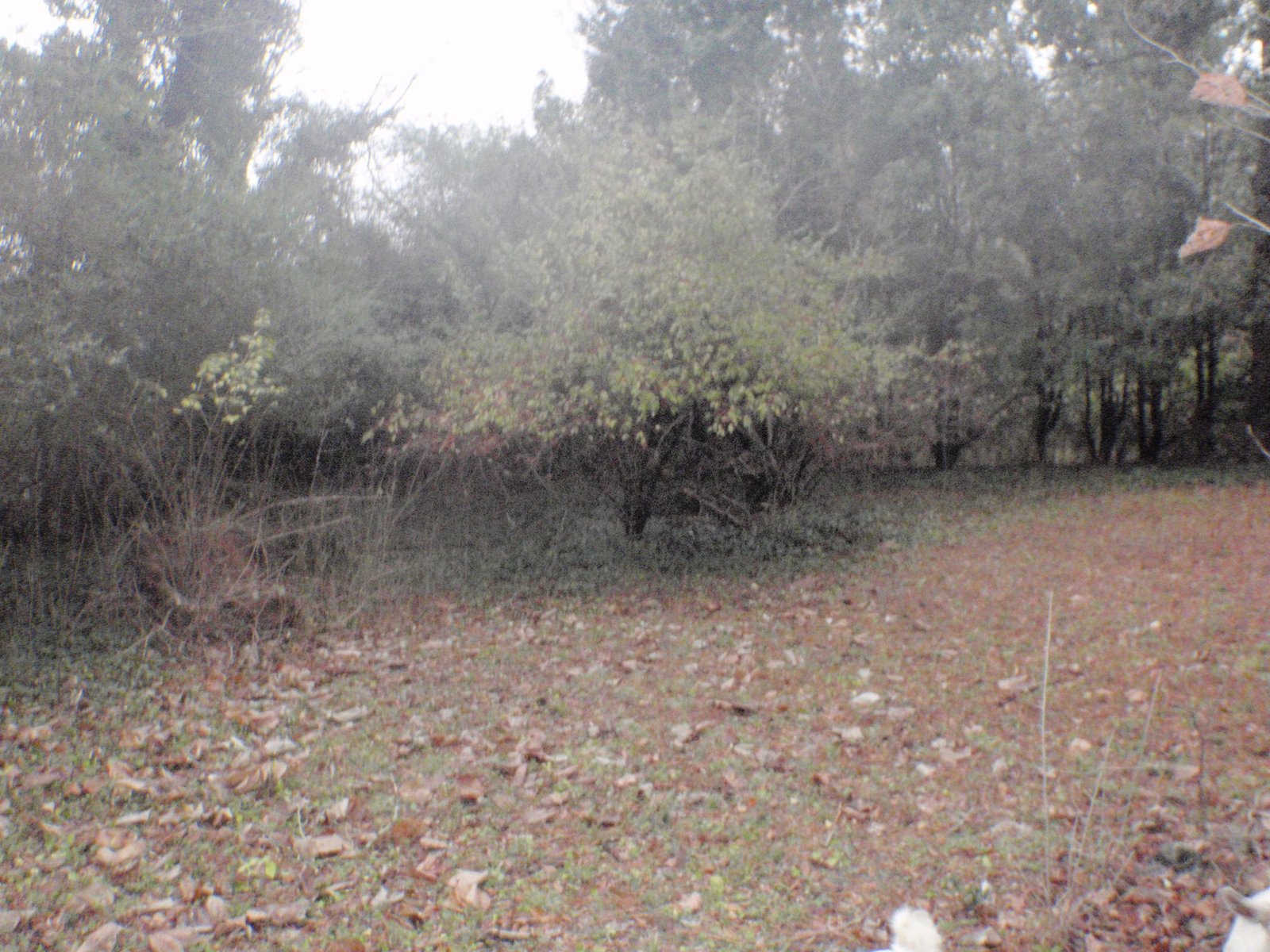
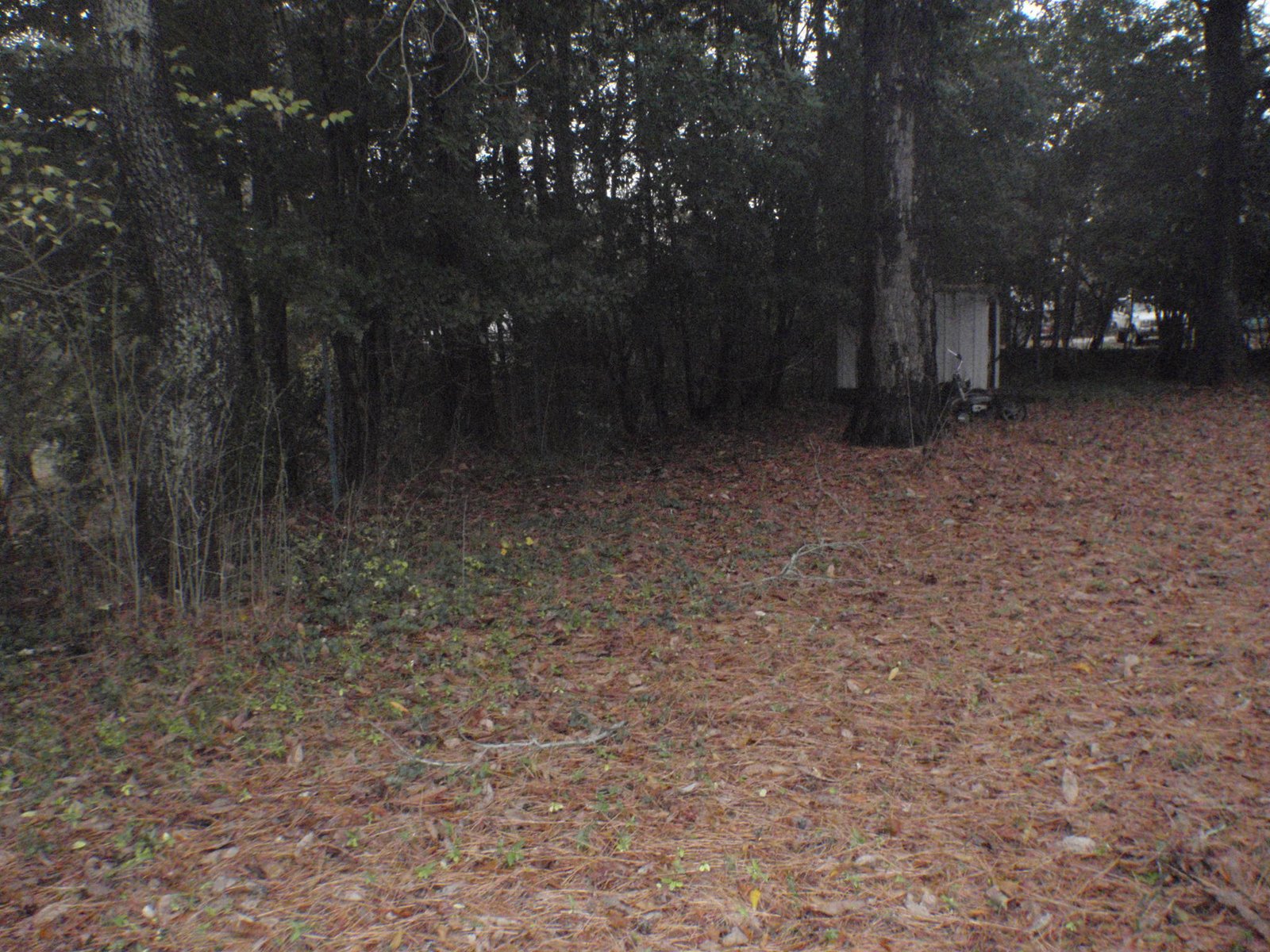
You'll have to use your imagination to compare the pictures below with what was once an opaque mass of privet and honeysuckle. Everything under 4 feet has been stripped bare, improving sight lines back into the yard. Hopefully, the groundlayer of English ivy will be the next course...


It looks like the goats will probably remain at Dana's over Christmas break as well. Not to knock on the Dougie House fence - which no doubt has more character - but Dana and Mikey's yard is a fortress. Almost 2 months, and not a single escape story.
From a restorative perspective, this offers some opportunities to
  • continue tracking how much damage 4 goats can do in over a month's time
  • observe how much leafing out the Dougie House yard experiences with no goats for a month
  • see how long it takes for the goats to clean up the Dougie House again after the break