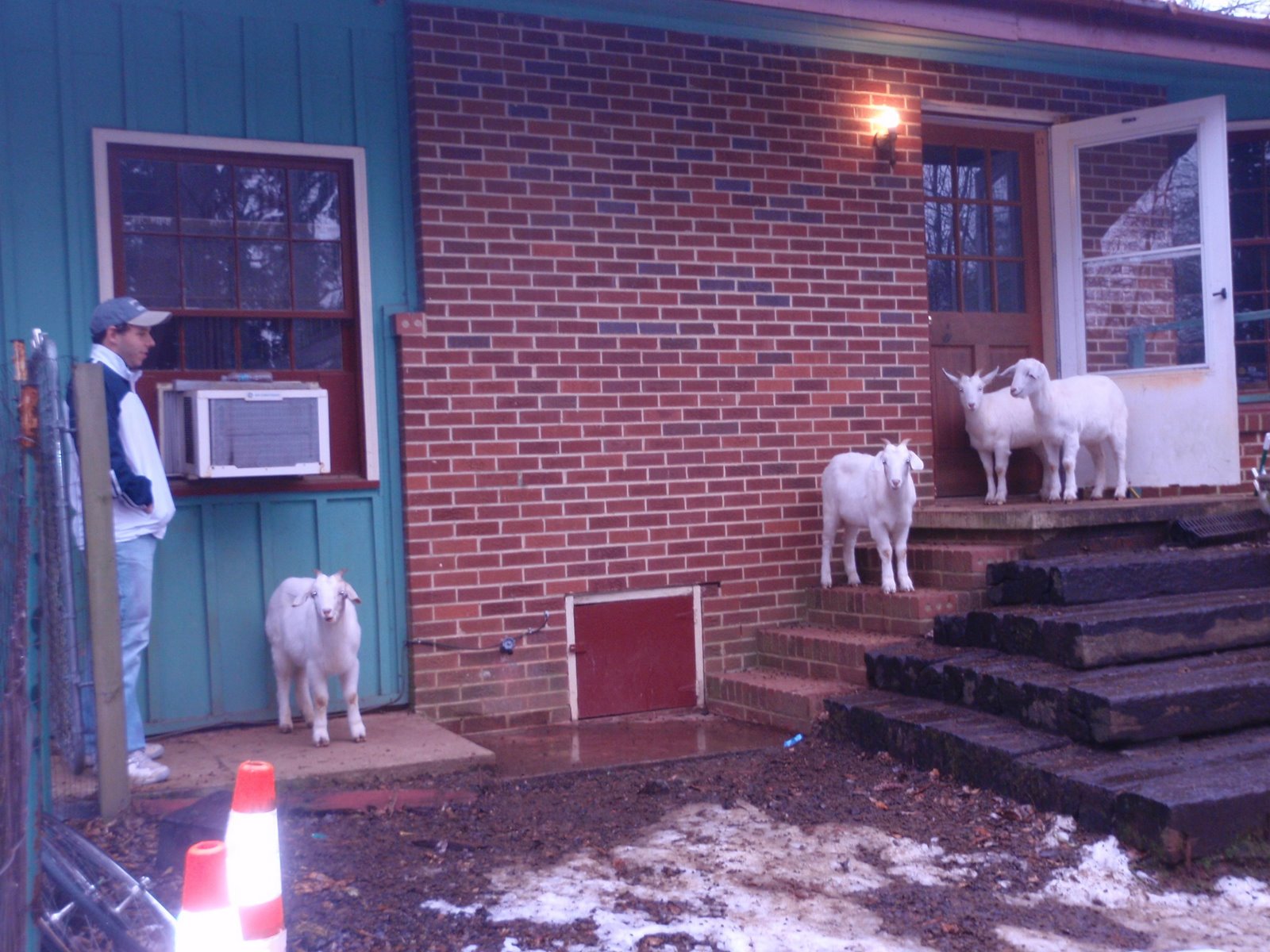
3.20.2011

"Hey, I'm not messing with your special lady."

As of recently, my roommates and I have enjoyed life as new urban chicken owners. There are a total of five new ladies in the backyard - 3 Rhode Island Reds and 2 Domineckers - all of which are laying eggs daily. (We had two ducks for a short time, too, but they were quickly eaten by an unidentified neighborhood predator.)


Aside from providing fresh eggs every day, the chickens have proved to be quite entertaining. You'd be surprised by the reaction a trophy earthworm can illicit. One favorite past time involves throwing treats at one end of their run then the other, effectively racing our hens back and forth. Their running style is pretty hilarious. Like a flock of mini velociraptors.

It didn't take long for merely hanging worms over them to evolve into trying to feed them by mouth. Chickens flying up at your face is pretty unnerving, but that's what makes it a worthwhile, noble activity, right? Aren't you proud, Mom?


I'll post more poultry-related material in the future, but for now, they're most useful in that their enclosure can double as a temporary goat enclosure. The goal is keep a couple of goats for two days and see how much damage they can do.
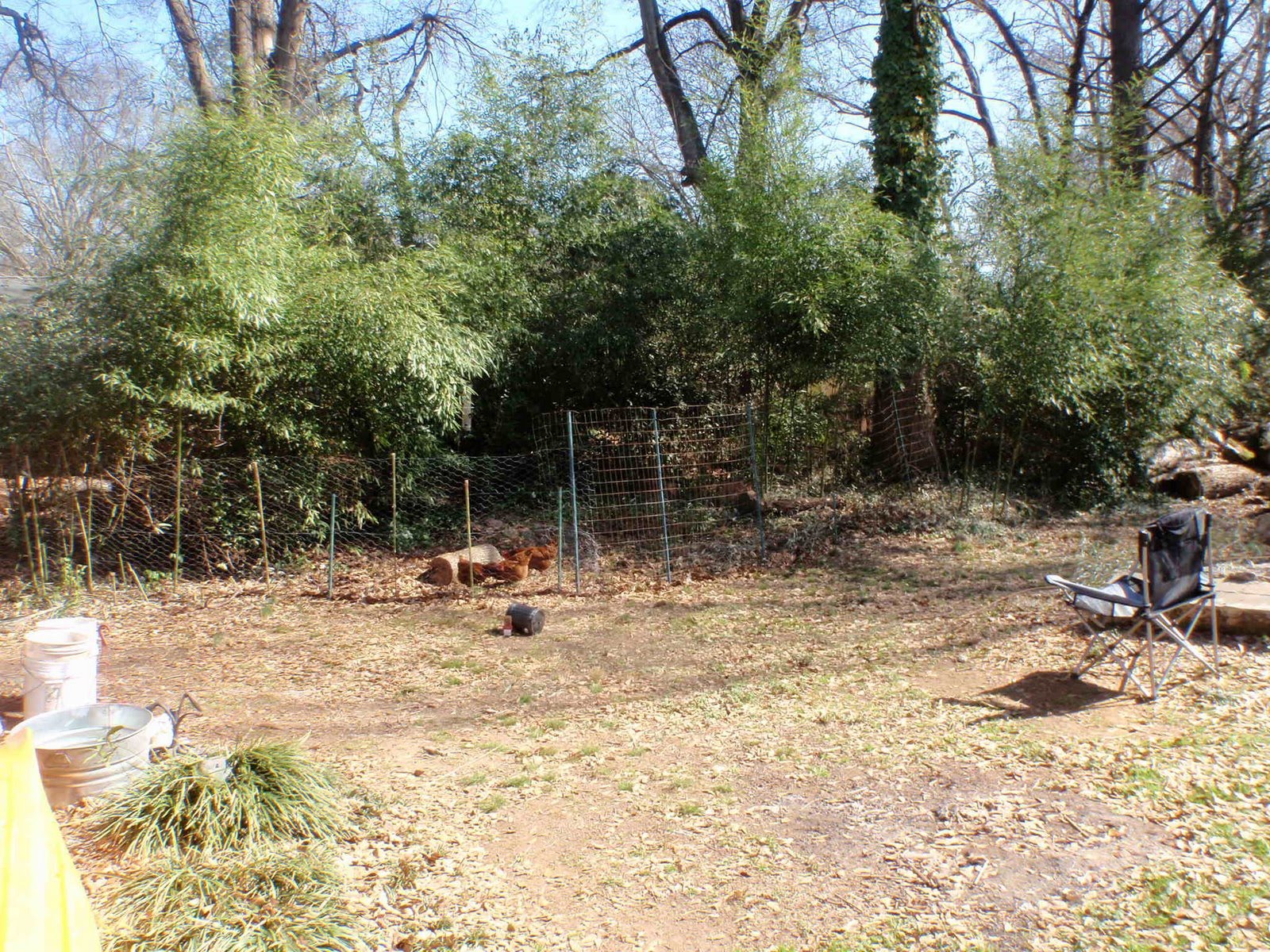

Right now, the enclosure is completely overtaken with non-native invasives: bamboo, autumn olive, and English ivy. If I had to guess, I'd anticipate the goats honing in on the bamboo leaves at head level. That would be ideal - limbing up the vegetation to increase visibility into the enclosure while at the same time preserving the shade and cover the bamboo offers.

"Way to go, Donny!"

Check it out. Looks like the University's catching on to the alternative grazing approach to ecological restoration. You can read more about it here.

Oddly enough, I used to ride my bike daily right by the parcel of land they fenced off - a linear strip of privet and honeysuckle sandwiched between the Oconee River and River Road. I can remember thinking to myself, as often is the case now, that "my goats would be perfect here." It's good to know I'm not the only one.


I had lunch the other day with two men from the University Architects office. They were interested in and encouraged by the blog, as well as very receptive to the idea of somehow incorporating goats into the equation in the future. At the very least, I offered my time and labor in an effort to stay involved with the project.


3.08.2011

"What is that, yoga?"

We have at my house no shortage of bamboo. Whatever spiteful gardener that previously lived here has left us and our neighbors with an infestation. But, as we now know, one man's trash, is another goat herder's treasure.
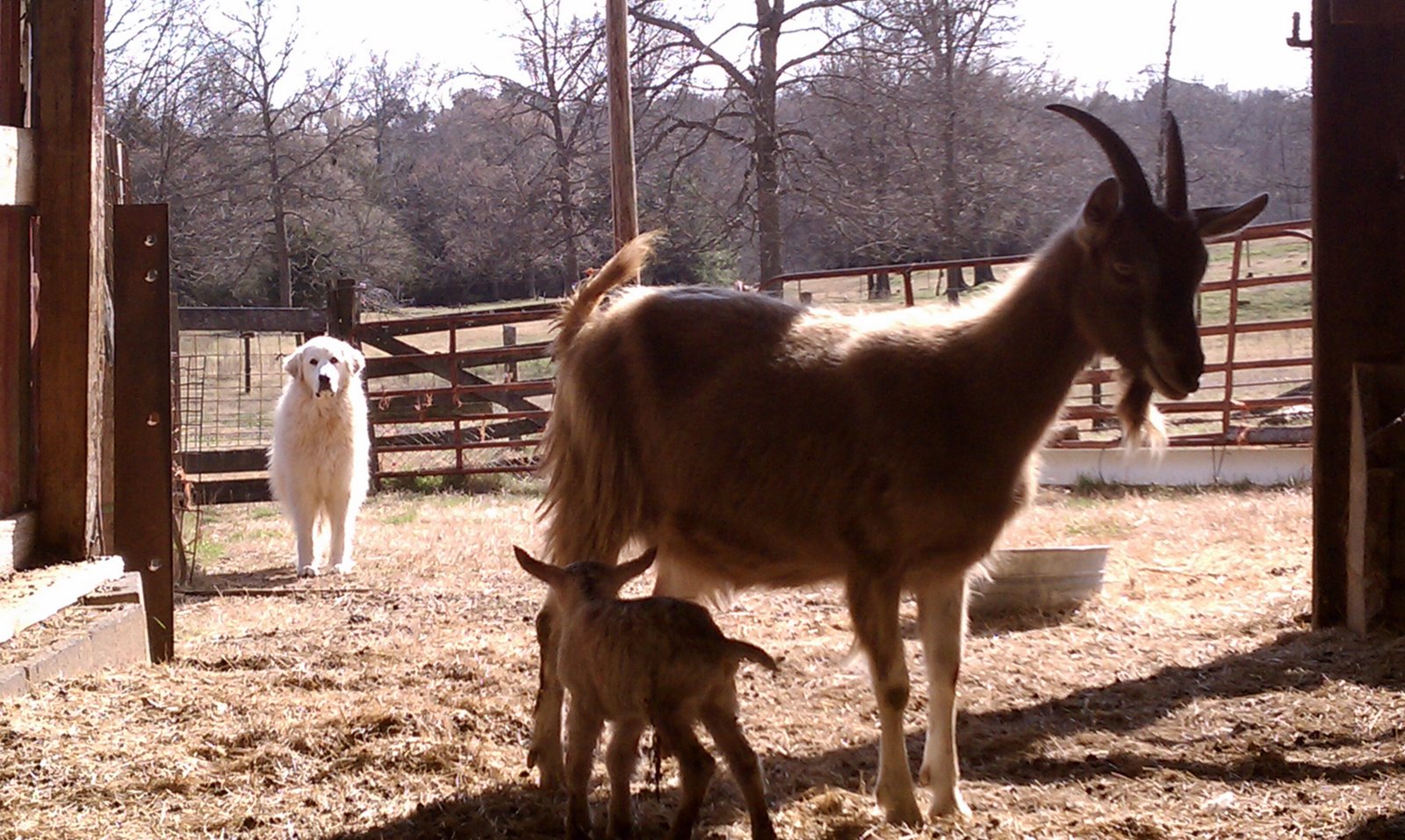
So, with the Jeep loaded down with the results of a heavy thinning, Brian and I headed to Mrs. Charlie's to share the haul with the herd. As anticipated, they were happy to see us.


What we hadn't anticipated, however, was getting lucky enough to be present for a goat birth. Unbelievable timing. And as if the timing weren't perfect enough, this happened to be the last remaining pregnant goat of the season.


Notice Abbey in the background. As you can tell, those dogs are incredibly vigilant and protective. Mrs. Charlie could not speak highly enough of her two Great Pyrenees. She stressed that had the goat given birth in the evening out in the pasture, one dog would have escorted the herd back to the barn for the night, and the other would stay by the newborn kid and its mother all night. She added that her predation rate since the two dogs' arrival has dropped to zero. Man and goat's best friend.
This particular goat is a Toggenburg named "Cripplet." (Her not-so-subtle name is the result a knee-stiffening birth defect that initially made walking impossible.) The sole leftover of a donated group of goats, she's the only one of her kind in Mrs. Charlie's herd. In most cases, though, Toggenburgs are used primarily as dairy goats.

Also, I'll take advantage of the corny segue opportunity and mention the birth of this blog's Facebook page.

Dana/Mikey Goats

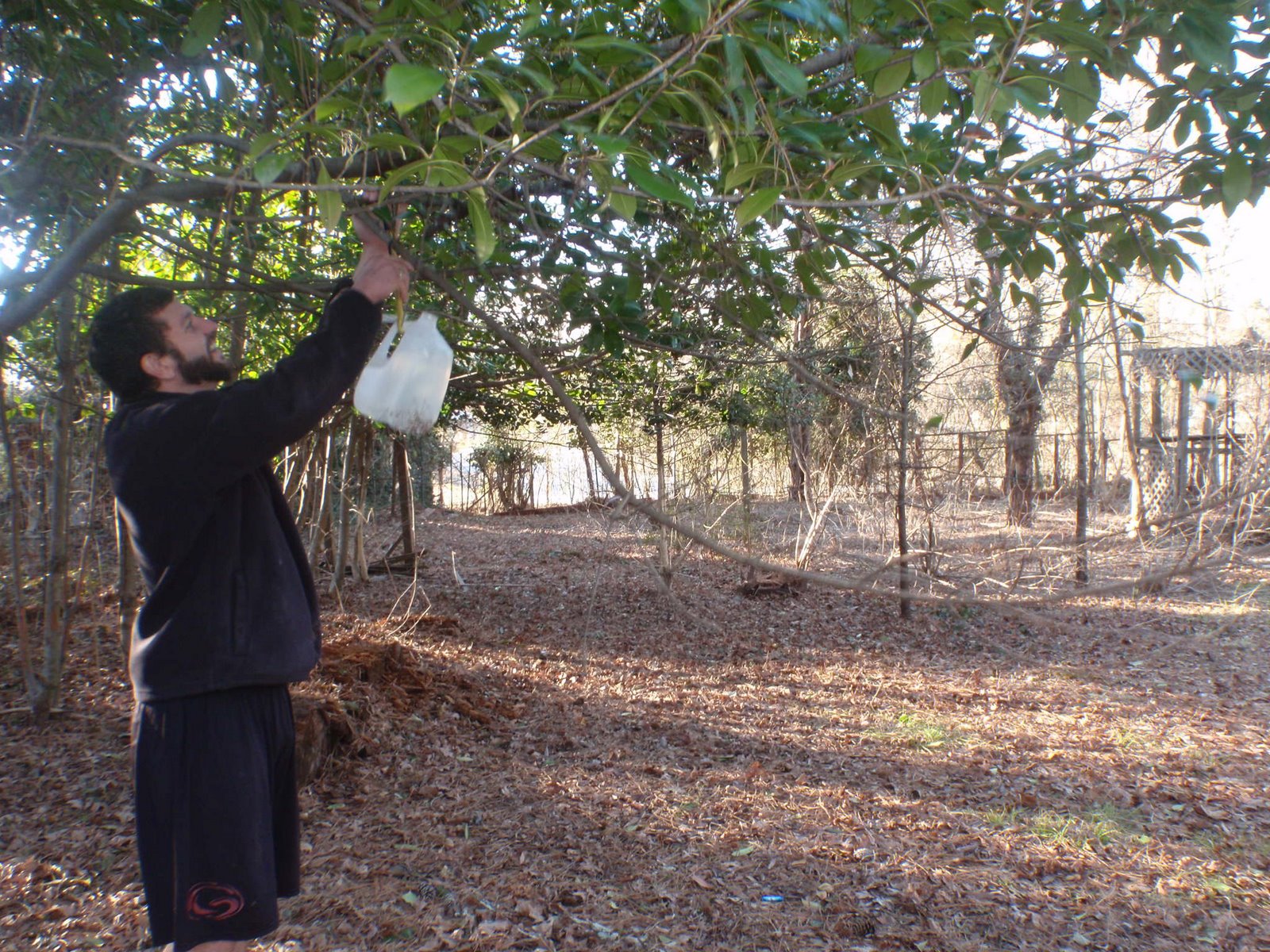
Next stop on the garden tour is Mikey and Dana's. Remember, this property had 4 goats on it for about a month. That's some intensive grazing. Given the time, the goats stripped the yard of any leaves under six feet. Even the plants they first shied away from - aucuba and holly - were completely denuded.
Now that I think about it, the length of time it took for the goats to naturally transition from more palatable invasives to less attractive ornamentals would be valuable to know.


Notice the leveled plane of vegetation in the pictures below. Somebody over there came up with the idea of hanging weights on the limbs to give the goats access to more leaves. Sheer brilliance.


Above is the previously impenetrable corner of privet, honeysuckle, and English ivy. A little elbow grease and a couple of goats, and voila, recovered yard space. What's also interesting is the goats' stripping the bark off the trunks of the larger privet. Those privet "trees" were left standing, but perhaps girdling them in such a way would be enough to kill them. Guess we'll find out...


Dougie House Update


Here's the first of a flurry of posts. Plenty to catch up on.
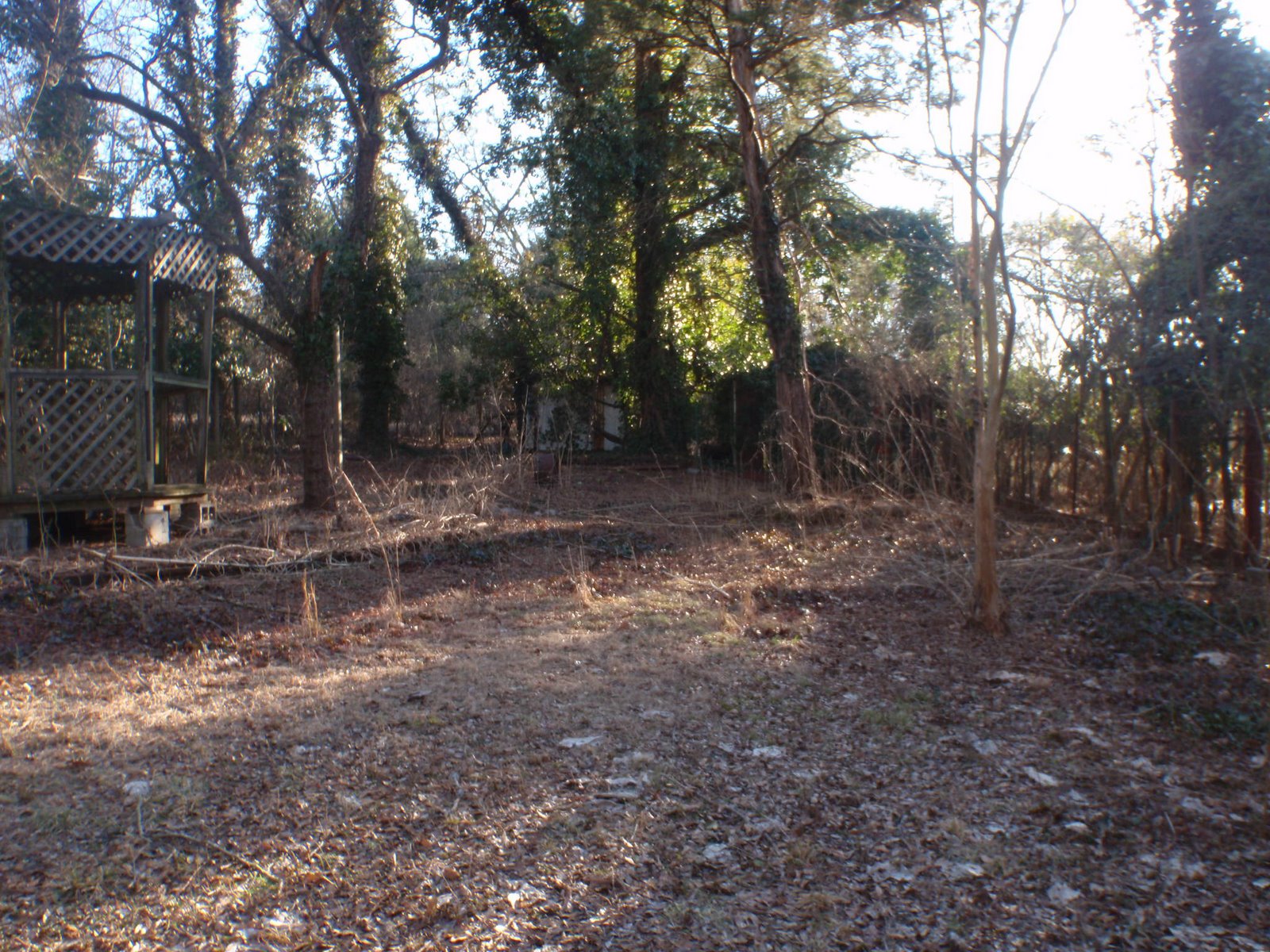
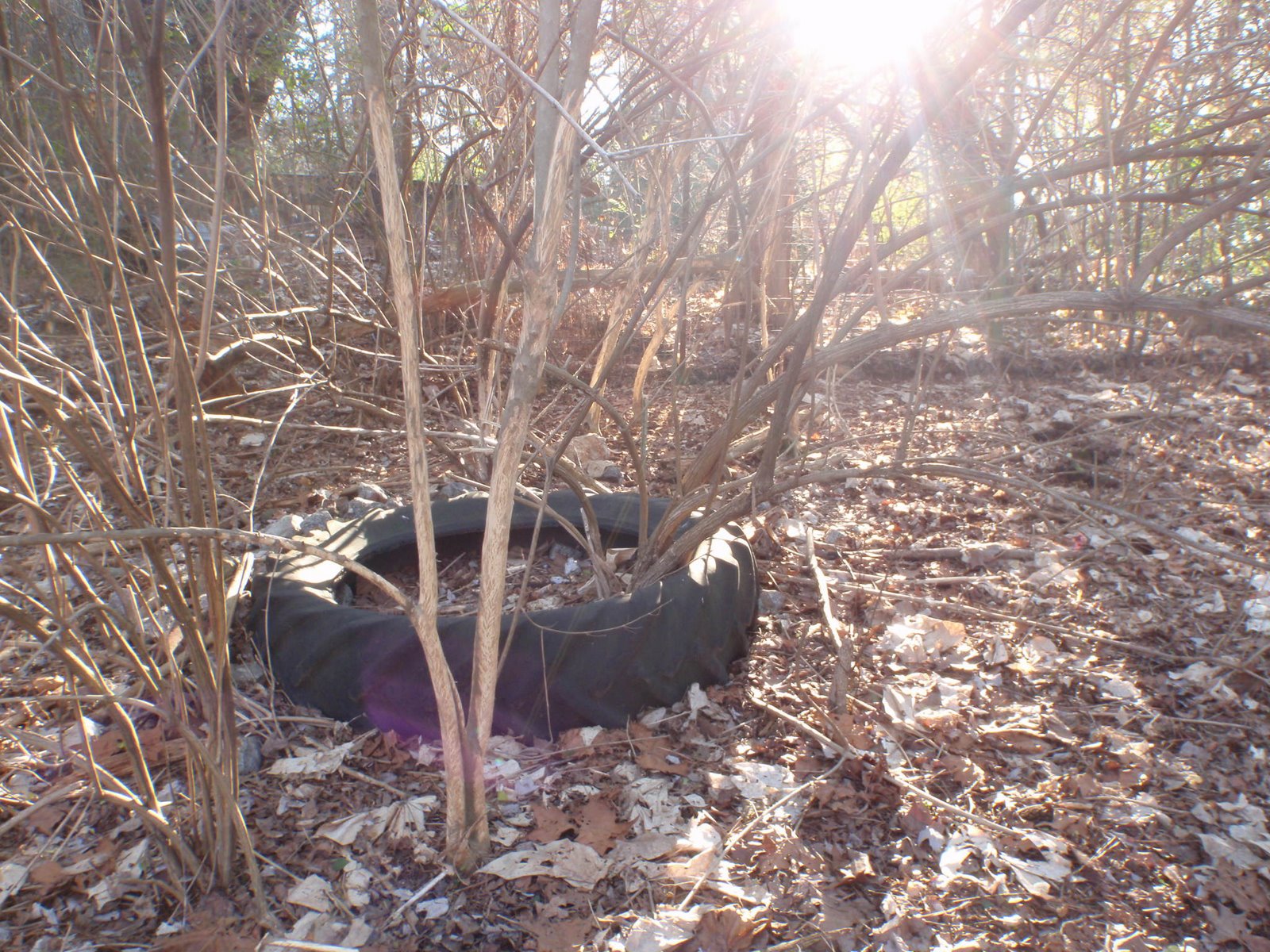
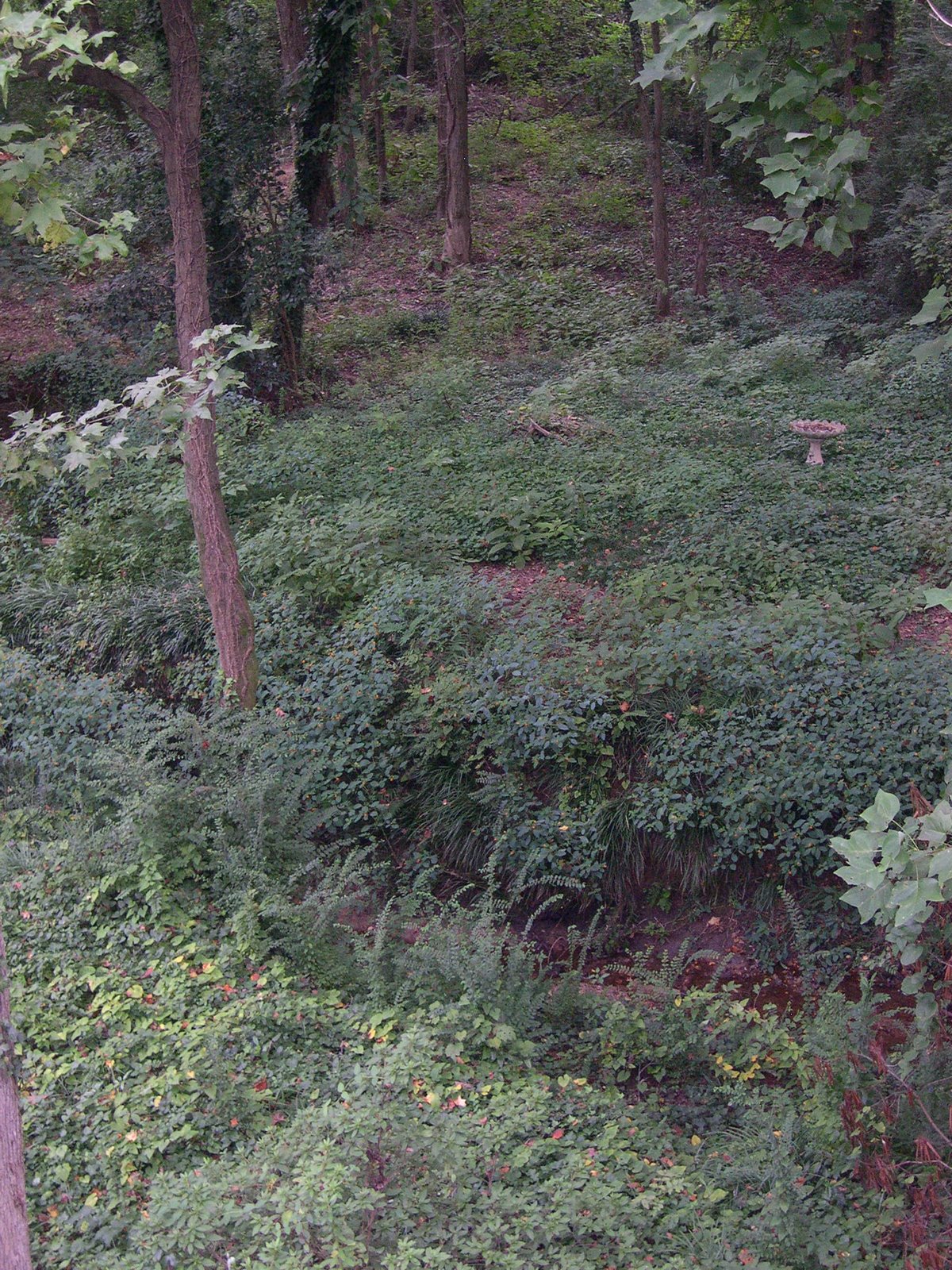
No better place to start than the Dougie House. Pictured below is the back yard as of this Spring. Notice the remaining bare privet behind the benches. The last image shows what the goats started out with about 2 years ago. Holla at ya herd.


2.11.2011

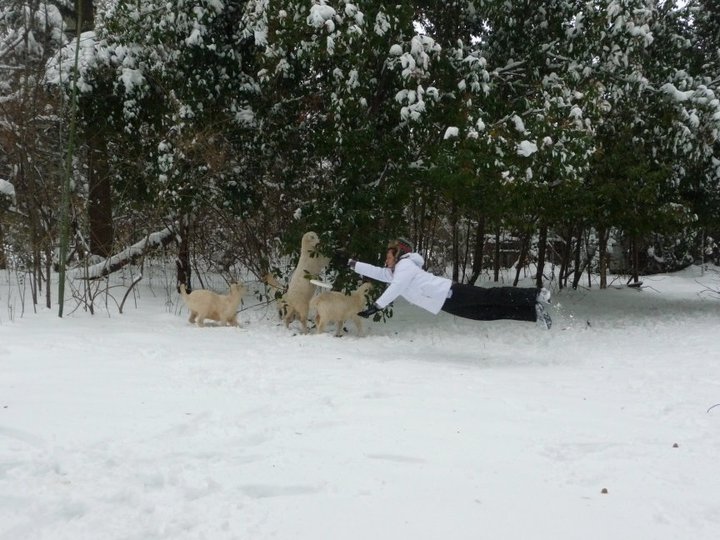
"I like your style, Dude."


This picture was taken in early December. From it, we can deduce that

a) Willy is a badass

b) 7 inches of snow isn't enough to deter a goat's appetite

c) Dana has a knack for frisbee/husbandry photography

1.25.2011

"Racially, he's pretty cool?"

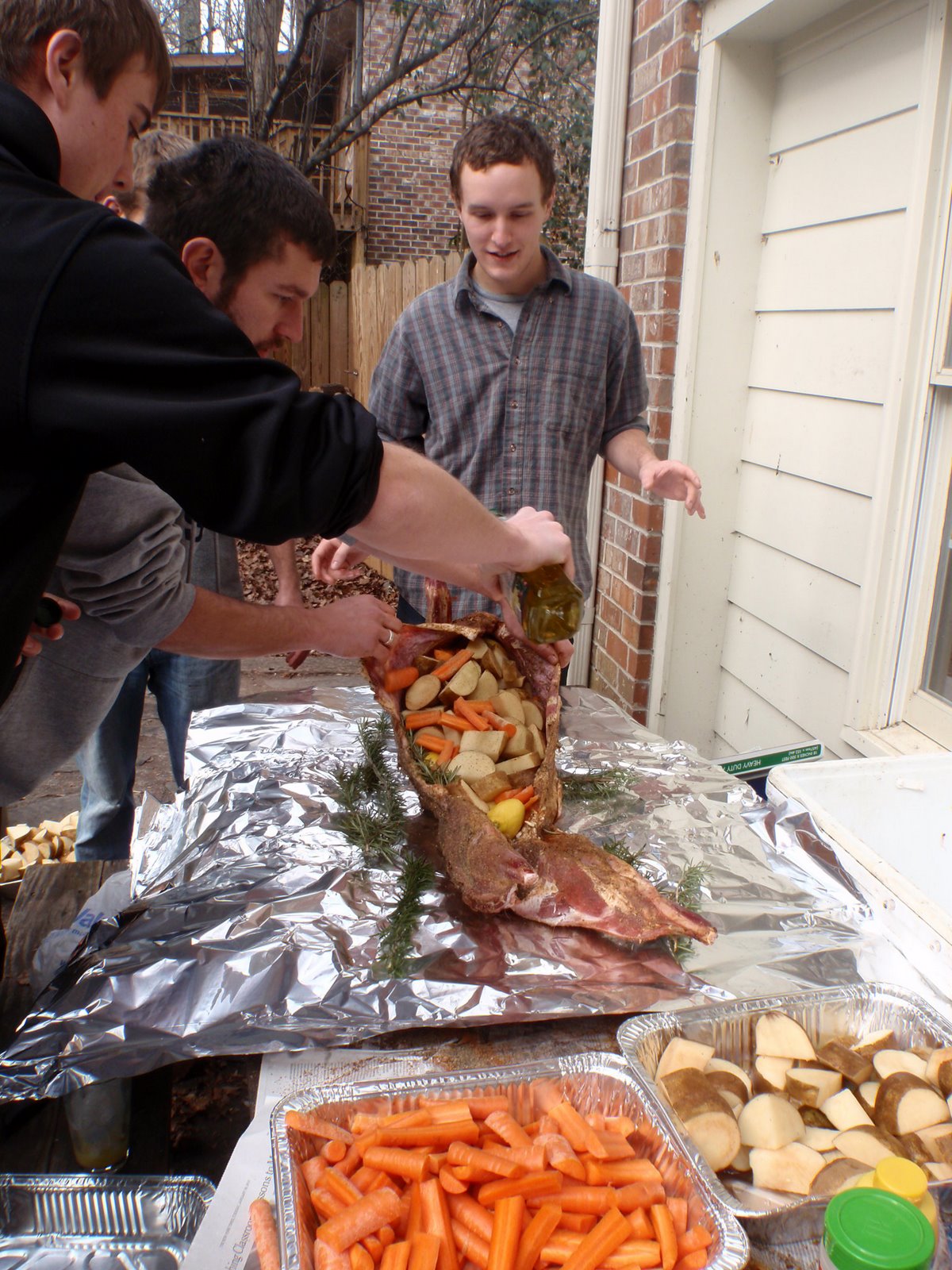
At both goat roasts, I've toasted the goats before releasing the masses to eat. And both times, I've delivered an average (at best) speech, worthy of nothing more than a head nod and stray "hear hear". Clearly, I'm no orator.

If I were smart, I would have incorporated some Wendell B. quotes. Nothing like a little agricultural activism literature to get a bunch of college kids jacked up, right? Add some alcohol and a spit-full of meat, and we could have a serious goat roast on our hands.

There's always next year to look forward to, though, so I've been digging around for some relevant passages. Mr. Berry's "The Pleasures of Eating" seems particularly appropriate. Aside from the all-encompassing phrase "Eating is an agricultural act," Berry suggests seven ways to better understand and appreciate our food. The first sentence of each point is listed in bold below.

1. Participate in food production to the extent that you can.

Turning over two overgrown backyards to a not-entirely-legal goatscaping experiment on a leap of faith seems pretty close to "the extent that you can." Check.

2. Prepare your own food.

Check.

3. Learn the origins of the food you buy, and buy the food that is produced closest to your home.

The total distance from fire pit to Ms. Charlie's barn is 12.2 miles. Check.

4. Whenever possible, deal directly with a local farmer, gardener, or orchardist.


Check.


5. Learn, in self-defense, as much as you can of the economy and technology of industrial food production.

Backyards beat industrial-scale feed lots any day of the week. Check.

6. Learn what is involved in the best farming and gardening.
That's why you're on my bookshelf, Wendell. Check.

7. Learn as much as you can, by direct observation and experience if possible, of the life histories of the food species.


When your goats' favorite hangout is the back porch, it's difficult not to learn the ins and outs of Capra aegarus hircus. Check.