1.18.2011

A Job Well Done


What a day. It's difficult to describe an afternoon and evening dedicated to killing and skinning four goats. Either in conversation or with text. So, I'll save the struggle for the next time somebody asks me in person.

Now, I can say that it went as well as a day like that can go. From start to finish, the guys insisted on being involved, eager to be a part of the process and learn as much as possible. I was impressed with just how willing they were to get some serious hands-on learning. Job well done, men.

Pictures of the process can be found here. Be forewarned, if goat guts aren't your thing, perhaps direct your attention here, instead.

Now comes the fun part: scheming about just how we're going to prepare these bad boys. The theme of regional cuisines has been tossed out, with each goat cooked in the style of a goat-eating culture. That could mean a Jamaican Curry Goat, a Mediterranean Goat, a North African Goat, and a repeat of last year's Texas Goat. Everybody's a winner.

1.17.2011

"If you will it, Dude, it is no dream."

Today is killing day. And only now has the unidentifiable heavy feeling in my stomach begun to set in. It's not a nervous or guilty feeling, but whatever it is, it's there. A respectful anxiousness almost. It was there last year, too, and I hope it's there every time I'm in a similar situation.

In nearly every conversation involving goat slaughtering, someone inevitably brings up the "sadness" or "guilt" I should supposedly be experiencing. "Was it hard?" "How could you kill your pets?" "But they had names!" Heard 'em all.

And why shouldn't people be shocked? Killing and eating our own food is something most of us have become distanced from, either by choice or convenience. To be honest, before last year's goats, I was no exception. I sped past the animal rights activists passing out flyers just as fast as the next guy.

So, putting ourselves in a position to buy, raise, kill, and ultimately eat a large animal seems counterintuitive. But, the knowledge gained from last year's experiences - and several more this past hunting season - has resulted in an entirely new personal philosophy on eating food. Now, it makes too much sense not to.

Credit should also be given to the recent increase in food conscious movies and literature. Food, Inc., Supersize Me, King Corn, Wendell Berry, and Michael Pollan created a perfect storm of influences that has helped alter my views, as well as the views of countless others. The fact that this year's goat owners are adamant and excited about today's slaughtering is proof enough.

If you, the reader, are struggling with the idea of our four goats dying, I say to you:
  1. Read and watch the media above. This essay by Michael Pollan is a good starting point.
  2. Understand that our goats lived the happiest of goat lives
  3. Rest assured the killing process will be as quick and humane as possible
  4. Come celebrate the goats - and food sustainability - next weekend with the end-of-season roast

12.18.2010

Goat Summit 2010

Recently, this year's goat herd owners and I met in the Dougie House basement to determine the fate of our four brave goats. Ultimately, as was the case last year, all four will be killed, butchered, and turned into a delicious meal. The question is when.

Because of exams, work schedules, and the holiday break, it was decided that the goats would remain on Dana and Mikey's property, where they can continue to destroy the backyard's privet, honeysuckle, and English ivy population until everyone returns after the New Year. Then, sometime during the second or third week of January, all four goats will be killed, slow roasted, and celebrated with another Dougie caliber cookout.

Pictures and notes from the Dana/Mikey goat compound will be posted in a few week's time. Meanwhile, the latest report on the herd is that they have continued to clean up the yard and, most importantly, begun to concentrate on the groundlayer of English ivy.

12.01.2010

"This is a private residence, man!"

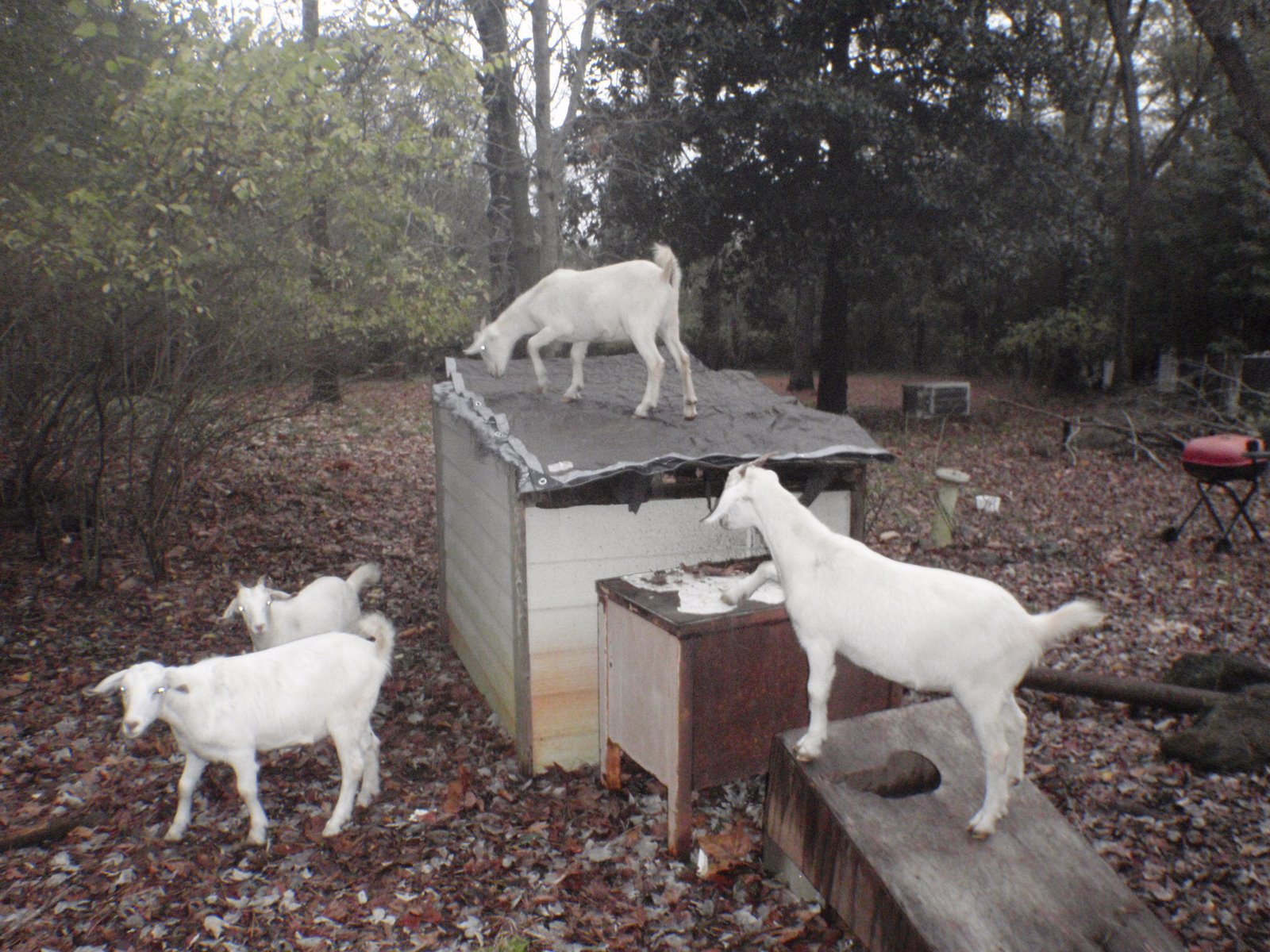
Like last year, the goats were together again for Thanksgiving Break. This time, the reunion took place in Dana and Mikey's yard, home of Trevor and Cody - the humble, grounded goats pictured below.


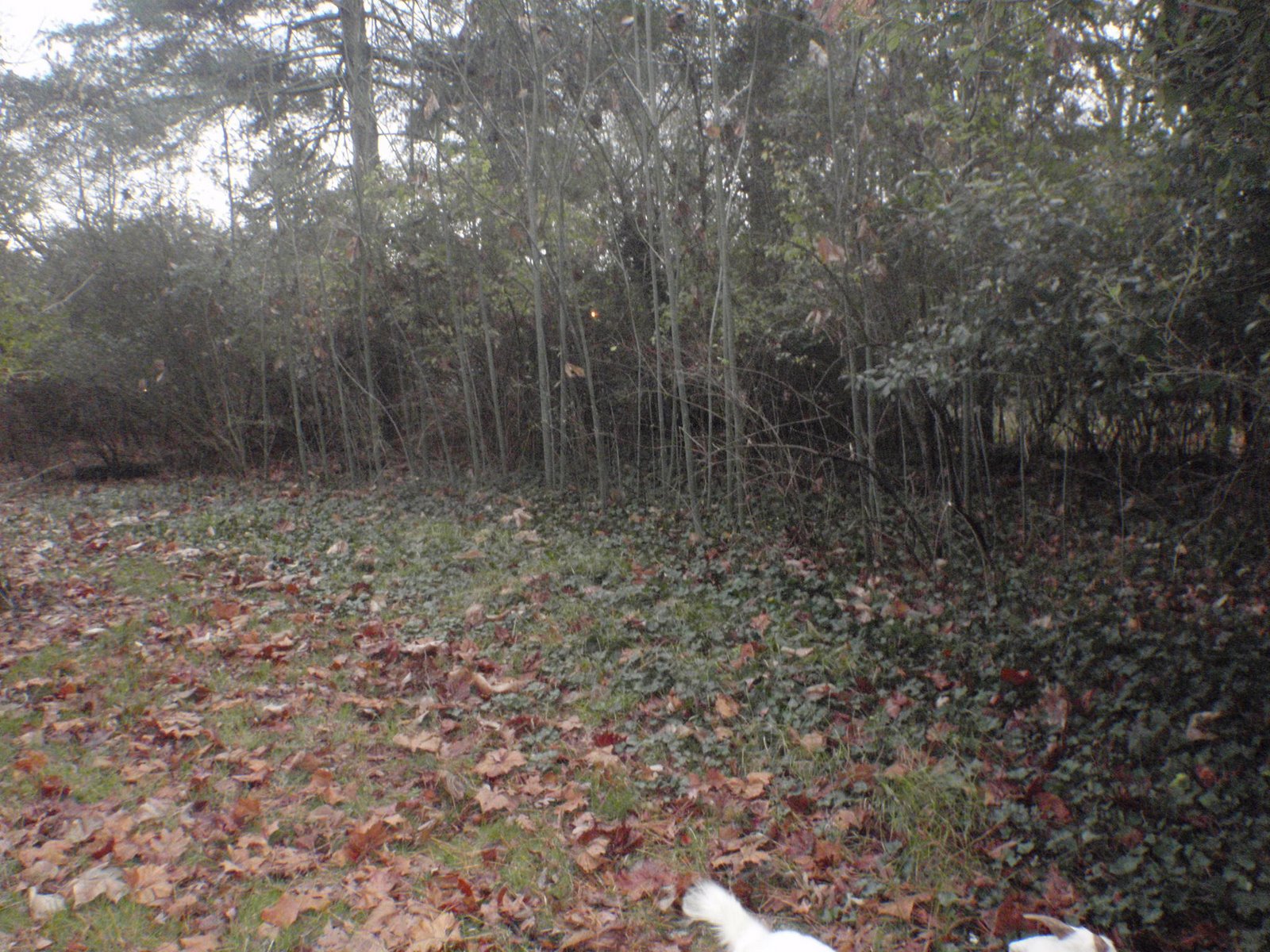
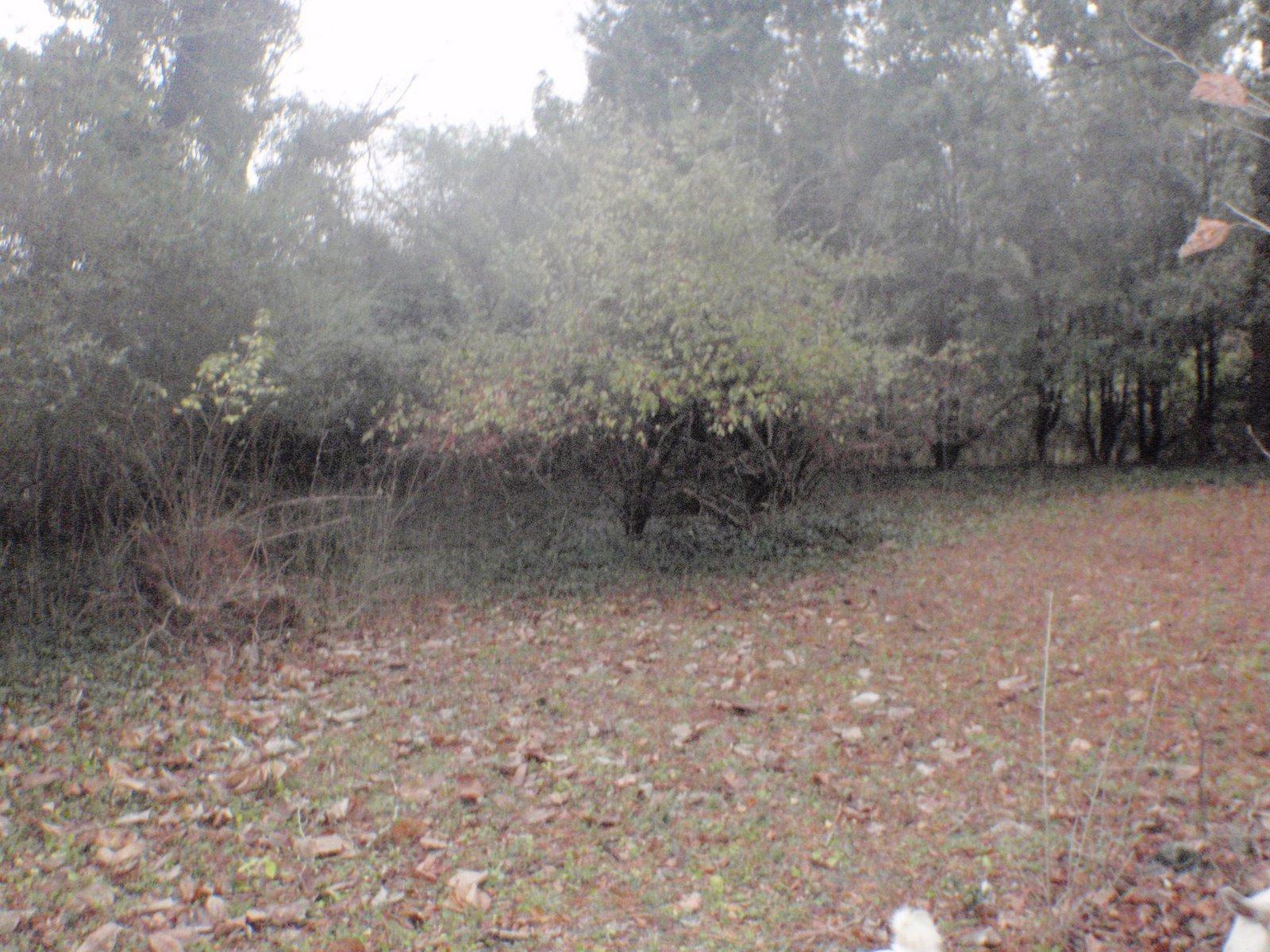
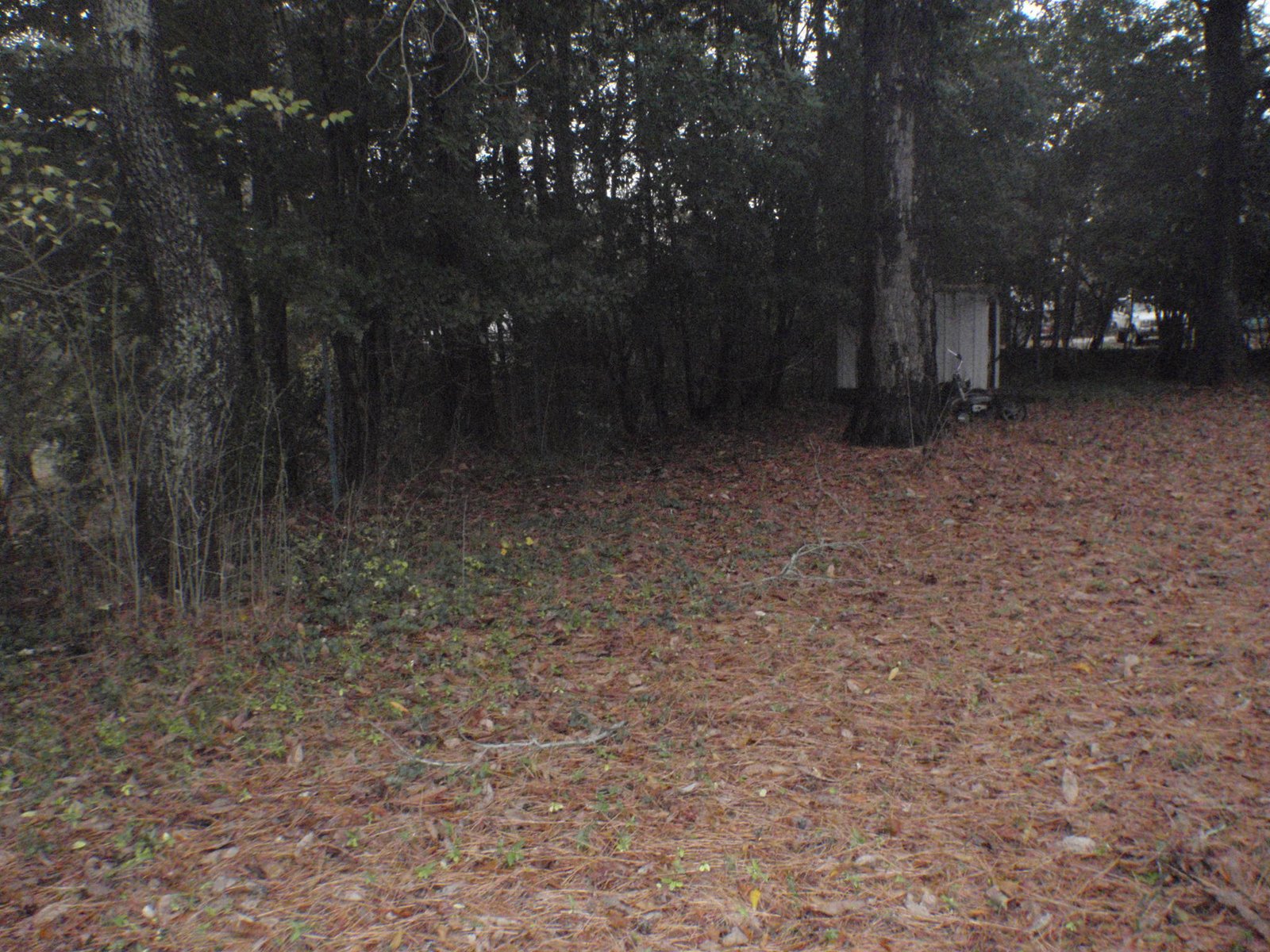
You'll have to use your imagination to compare the pictures below with what was once an opaque mass of privet and honeysuckle. Everything under 4 feet has been stripped bare, improving sight lines back into the yard. Hopefully, the groundlayer of English ivy will be the next course...


It looks like the goats will probably remain at Dana's over Christmas break as well. Not to knock on the Dougie House fence - which no doubt has more character - but Dana and Mikey's yard is a fortress. Almost 2 months, and not a single escape story.
From a restorative perspective, this offers some opportunities to
  • continue tracking how much damage 4 goats can do in over a month's time
  • observe how much leafing out the Dougie House yard experiences with no goats for a month
  • see how long it takes for the goats to clean up the Dougie House again after the break

11.29.2010

"Come on, Donny. They were threatening castration."


"Nobody's going to cut your dick off. Not if I have anything to say about it."


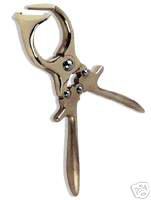
It's goat birthing time again on Miss Charlie's farm. Or at least we thought it was. A goat's gestation period is right around 150 days, or 5 months. So, with that fateful day drawing near, I spent the afternoon on the farm with the intent of getting some hands on experience in goat birthing and castration. Who knows, might come in handy later. Unfortunately, I came a little too early and wasn't needed. Maybe that's not a bad thing, though. Check out the tool used for castrating the poor little guys:

Definitely not something I see myself ever being comfortable holding. Ouch.


I did, however, get a chance to take the kayak out on the farm pond for some fishing. And, I wouldn't be a true fisherman if I didn't take this opportunity to brag about the catch of the day:


As much as I was tempted, Photoshop was not used in this image. Just a hoss.


Next time I'm out at the farm, I'll be sure to take some pictures of the herd's newest members. If they're anything like last year's bunch, they should be as entertaining as they are cute.

11.25.2010

Another herd. Another service project.


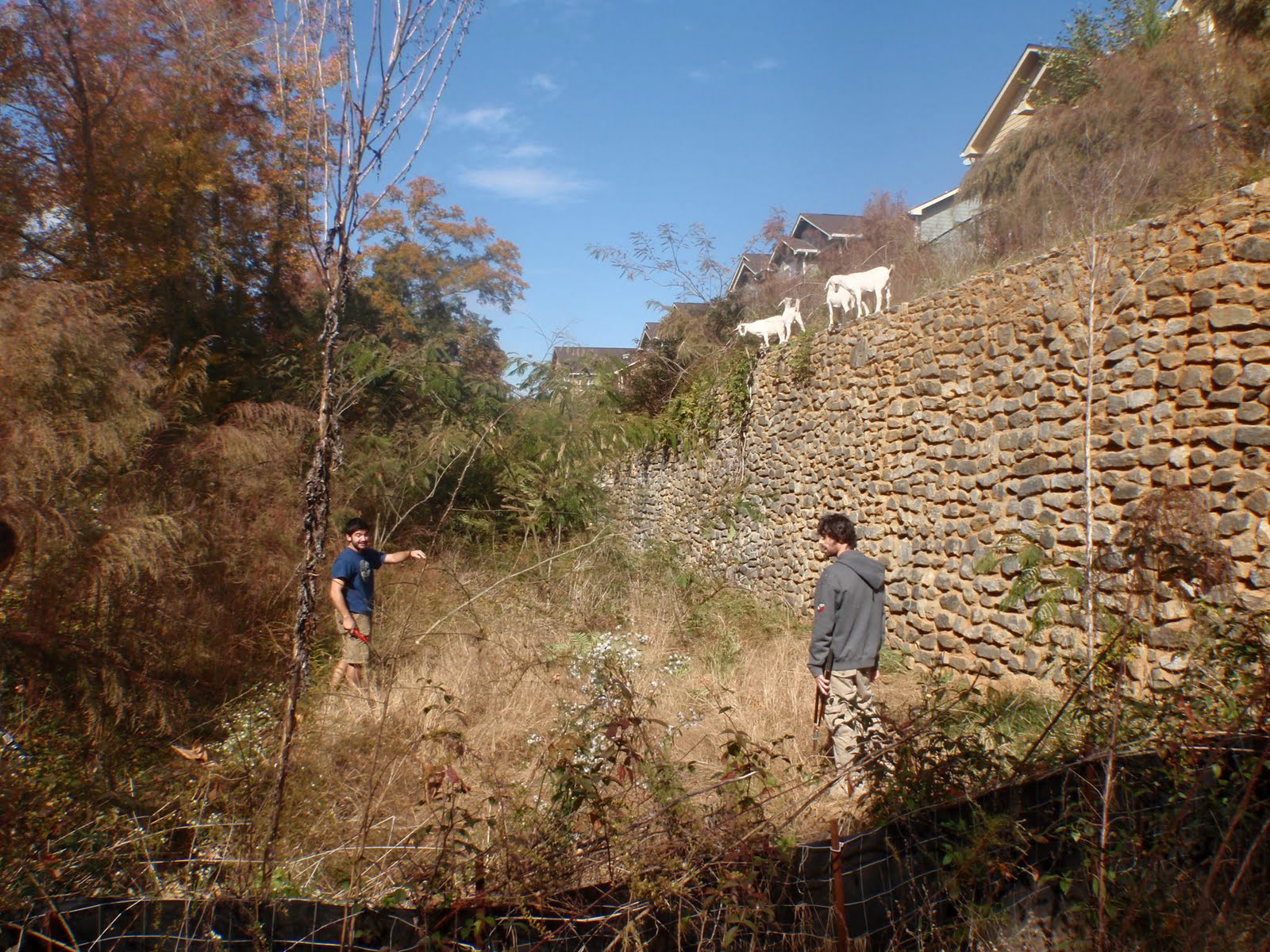
Click on the picture above to see a few more pictures of this year's chew crew going to town in a fenced-in, overgrown detention pond in one of Athens' first affordable housing complexes, 4th Street Village.

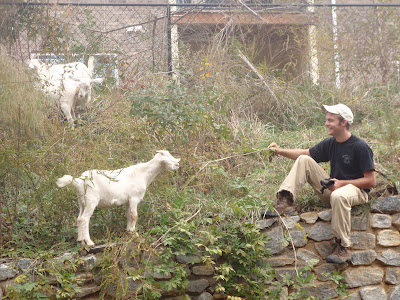
Besides a little tighter squeeze in the makeshift transporter and an unpleasant introduction to fire ants, our four goats peformed wonderfully. While Caroline, Clarence, Thomas, and I felled mimosa trees and gathered trash, the reunited goats spent the afternoon grazing on a smorgasborg of wisteria, dog fennel, and privet. Although a mere 6 hours barely put a dent in the space's overall appearance, the outing definitely serves as proof that goats should be considered as an economical, quiet, and entertaining management solution.


"Maude? That's my robe."

Picture borrowed from ultimategoatfansite.com

It's a common misconception that goats will eat just about anything: hair, tin cans, rope, or this unlucky lady's top. The truth is, I was surprised to learn, that goats are relatively picky eaters. Several species in the backyard, for whatever reason, have escaped the terrible fate of goat grazing. Listed below is a running list of the less palatable plants.

  • Redbud
  • Azaleas
  • Hollies
  • Ferns
  • Jewelweed
  • Aucuba
  • Cherry laurel
From an ecological restoration approach, it's interesting to note that several of the plants our goats walk by on their way to privet are native. Perhaps even more noteworthy is that a few of these species have appeared naturally after last year's herd cleared the dense mat of monkeygrass and ivy.